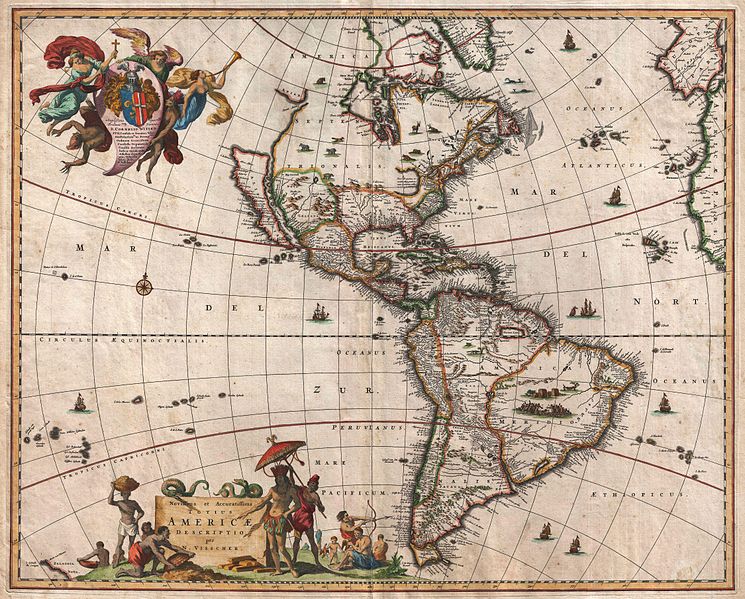
Searching out the subtle absurdities of the world is an edifying and diverting occupation.
The idea of a map, for instance, is quite inconsistent with itself. The pursuit of knowledge progresses as we cross-question the finer points of the world, and the most profoundly erudite scholars are those who know half a billion insignificant details. The scientific method was not born by taking a broad glance at the world and recording general impressions. Nor was the study of history was born from recording offhand ideas about history is in general.
But after all his intense geographical study, explorations, coasting continents mile by mile, man produces – a map. Something that someone can glance over in a moment, even memorise entirely in just a couple of days.
And yet this is absolutely necessary for any intellectual progress to happen. Intelligence feeds off ignorance. How many geographers today could tell you all about each of the ins and outs of Cape Horn, and the caves on the coast, and the precise measurements of each gulf? Yet in order to produce the maps they studied in primary school, someone had to do it. No one becomes an original genius in any field without first digesting the garbled and overcondensed excerpts from their predecessors which we call ‘maps’ and ‘introductions’ and ‘textbooks’. No one can learn everything that has been learned in their field from start to end. So these travesties we call maps are necessary.
The ‘introductions’ that you find in books of literature, philosophy, and so on, should really be called ‘extraductions’. They are the canned conclusions that people who have done intense and detailed study of texts have reached, not the premises from which they reached the conclusions. Often they are best read after the book itself. They are neither necessary to read the book itself, nor are they likely to introduce the casual reader to further study of the text – introductions are the conclusions of scholars for the general public who don’t have time to read what the scholars write to each other.
 theparsnipoftime