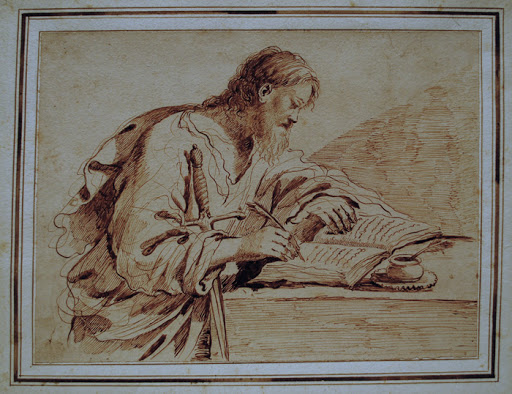
The great technological revolution of antiquity – but people forget it, since it occurred so long ago, and over such a long time – was greeted as warmly and as coldly as the more recent technological revolution. Plato gave an opinion on it as it approached its conclusion: “He would be a very simple person who should leave in writing or receive in writing any art under the idea that the written word would be intelligible or certain, or who deemed that writing was at all better than knowledge and recollection of the same matters.” This thing writing, he thinks, neither answers questions nor defends itself against misinterpretation. It does not fully convey the truth. Thus wrote Plato. Memory and conversation are better.
Now, perhaps the luxury of reading and writing weaken the memory by making it redundant. Perhaps, judiciously used, they may strengthen it by providing it with plentiful exercise. That I do not know. What I do know is that it is an eel, promising help and slipping your hands with equal ease. I have thoughts – I determine to commit them to memory, and soon find I have forgotten them. I write them down, but forget them all the sooner! Writing is a good way to pleasantly whittle away the hours (on existential whittling, more another time). But then it starts to whittle me away. If I write something I am interested in, I detest my writing for misrepresenting my thoughts. If I write about what I have never given a thought to before, I am pleased with it, but have no reason to be.
And with that skeptical glance at writing, I set out to write.
Plato’s concerns can be appreciated, but are largely illusory. All they really boil down to is that the written word cannot be sure of teaching what needs to be taught. Its two enemies, in that regard, are misinterpretation and incompleteness. It cannot answer everything that the reader could ask. But neither problem is exclusive to writing, and neither utterly destroys the value of writing.
Far more pressing is a concern which has arisen since Plato’s day, namely, that so much has been written that only extreme qualification and specialisation can be certain of adding anything new. But I have not set out to write anything new. What I desire is to write something worth reading. To achieve this goal, I ignore much that is generally known; if you want, I seek the effect of novelty, even though I do not achieve real novelty. If of single books there are thousands of copies, why should there not be copies of single ideas, from the pens of many people? Nevertheless, as book copies may run to surplus, so thoughts may run to surplus. The long and short of the matter is, strike at novelty, but do not expect to hit it. Your true intentions should lie elsewhere. No author writes for the world: he writes for his readers. Therefore his ideas need not be novel to the world – only to his readers. Are not most things novel to most people? Nevertheless, there are many thing which would be novel to very few people.
Not all writing is for the public, though. In writing personal notes, what is most to be avoided is a cognitive bureaucracy. All writing must come from thought, but not all thought must flow into writing. By Johnson, “The greatest part of a writer’s time is spent in reading, in order to write,” but thought, I say, should come in second. Think more than you write. If you write everything you think – if everything you think on the topic you plan to write on is put on paper – cognitive bureaucracy ensues, thought is shackled to paper, and progress founders. Writing notes is indispensable, but they should be as brief and pragmatic as possible. The working should be done mentally, if possible. Notes should be used like a walking stick – used to support thought, not to transport it. Writing notes is slow work, thinking quick work, and to write well, there is much to be considered and much to be sorted: there is not enough time for a thousand drafts. My temptation is to write what I do not need to write and rewrite what I have already written, because it is easier than thinking and writing new things. It is better to document only what thoughts need to be documented.
 theparsnipoftime