R.J. Brummer was the man who invented the wheel. When asked about his invention by neolithic Egyptian ambassadors, Rugu Je-magk is said to have replied, “eknæfi ‘ni huknu-puki, čvilyað hummer’ mĕn hapt Djafi Metumophem. En fēãŋ, ded’ šlakkher aüei; en q’ perittiom”: ‘We stand on the shoulders of very tall people [lit. “the short among the gods”], and my work owes its entirety to the publications of Djafi Metumophem. He will always be the first and greatest of inventors, to my mind, [because] he is the [one who discovered] trees.’
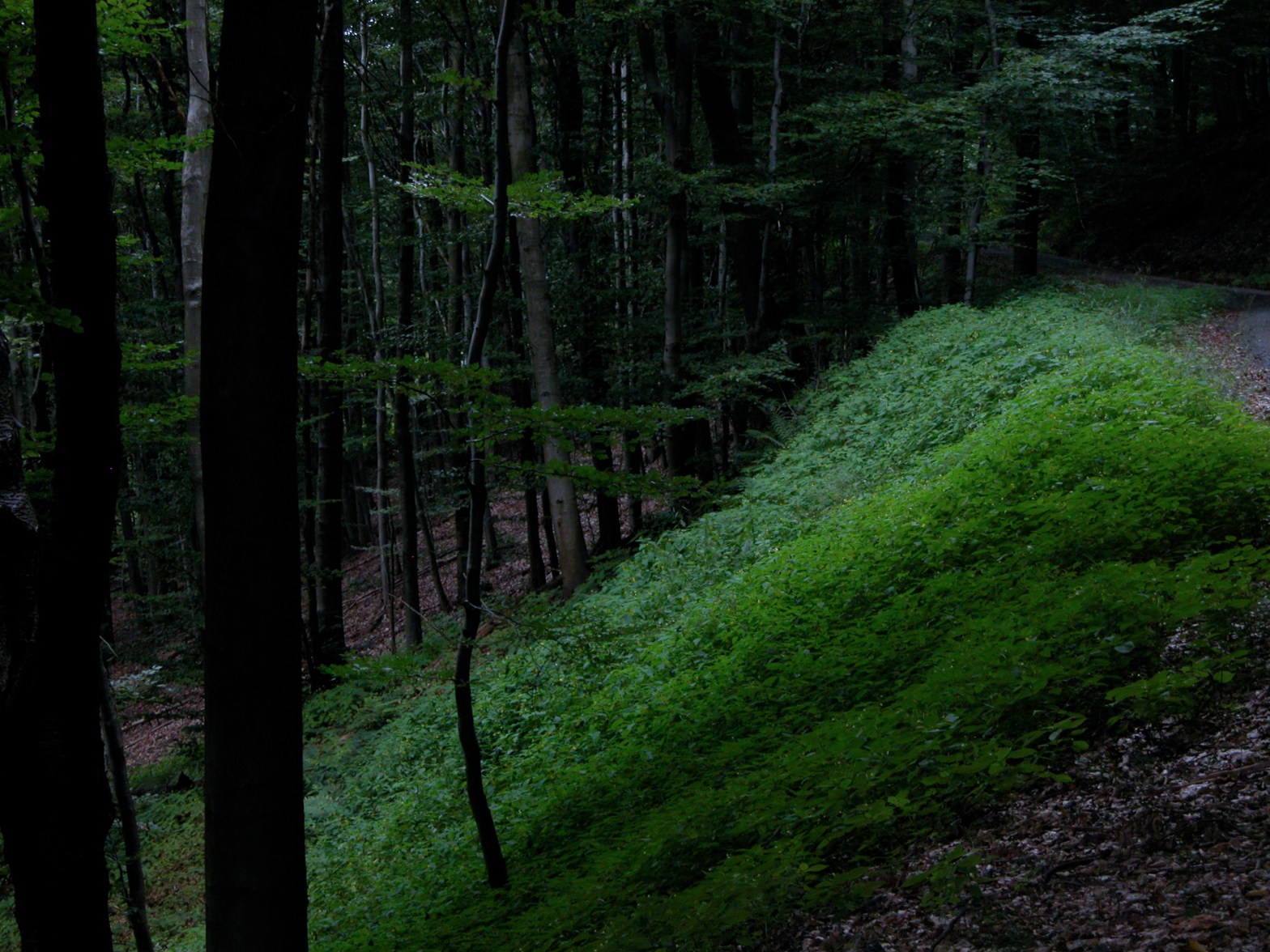
Trees are very versatile, to be sure; and though, perhaps, neolithic pseudopreprotoindoeuropean must have had a very loose definition of ‘inventor’ to apply it to the good Djafi, we surely owe him some thanks. And since we have undertaken to offer an unsystematic explanation for what will hopefully amount to almost a visible fraction of everything, we cannot neglect trees.
Maybe the most interesting use of trees is to supply the deficiency of personalities. This may sound surprising. The personification of trees goes back at least to the ancient Greeks (dryads) and rattles along just the same today. Some people remind one of trees. Like other striking personalities, these people are useful models for fiction writers and poets. But far better, if trees are what you’re going for, are actual trees, like ents or dryads. If you want something with all the forest qualities, damp and leafy and covered in bark, gregarious but quiet, why not replace human beings with dendric beings and people with trees?
Then again, trees act as a kind of barometer for city-pressure. Aside from such massive aberrations as deserts, the amount of trees indicates how urban the landscape is. The innermost part of the city has no trees, the least developed and the most remote places have many trees. You can further estimate how liveable a city is by how many trees it is fortunate enough to have. A city that has grown quickly and can offer only the minimum space to each individual has very few trees indeed. It is the cities that have had time to organise themselves that do have trees, and it is certainly more pleasant to live in a city with trees. These are the cities that have withstood and absorbed the city-pressure, hence they give a low reading on the tree barometer.
Trees provide us with homes, as many of us as have taken to permanent arboreal residences. Like the ewoks, like Cosimo di Rondò too, their livelihood hangs pendant from the branches. They of all people know best how daedal trees are. They know how dead trees provide firewood, how broad trees provide shelter, how bendy trees provide rocking chairs, how big-leaved trees in rainy places provide showers, how long thin trees provide postal catapults.
Of course, many other houses use wood as well, and you may be aware that trees are also used for paper, furniture, food, textiles, and fuel, as well as a vast variety of other commodities. And of course, they are pleasant to be around. But there is hardly time to complete this brief taste of arboreal technology, and we must hasten to the scrutiny of our next topic.
 theparsnipoftime
What a tree-t this is. I knew a fellow…his name was Pine Baum…he was the Head Guruju of Rajahamastan…he said once that trees were like birds…soft and pretty, but also in possession of very sharp beaks.
LikeLike